
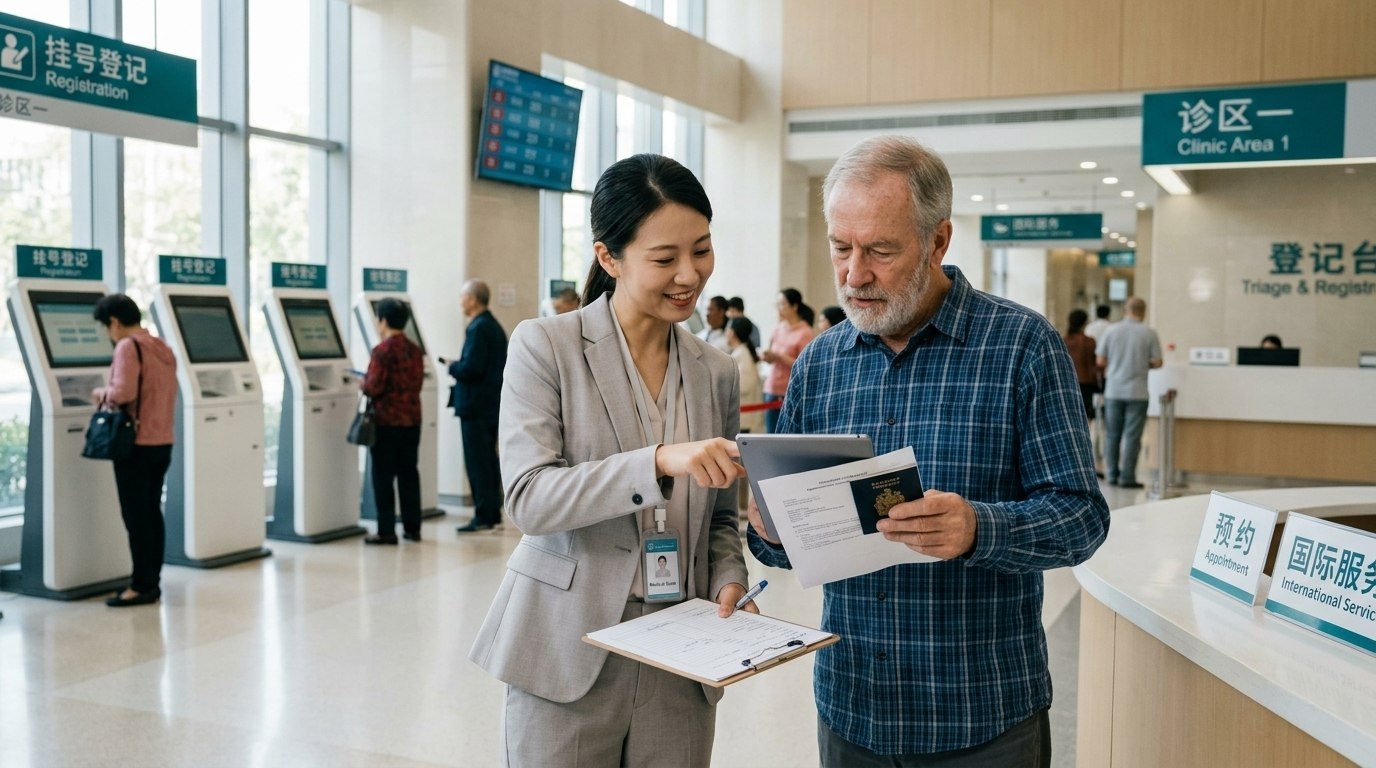
You do not need to master the whole healthcare system—only a reliable route through it.
Start With Two Separate Budgets
Build one budget for hospital care and another for everything around it. The hospital budget may include registration, consultation, tests, imaging, medicines, admission deposits, procedures, implants, rehabilitation and follow-up. The travel budget covers visas, flights, accommodation, interpretation, local transport and coordination. Keeping them separate makes quotations easier to compare and prevents a service fee from being mistaken for a hospital charge.
Ask the receiving hospital or international department for a written estimate, but treat it as a planning range rather than a fixed price. A doctor may order different tests after examining you, the length of stay may change, and complications or a revised treatment plan can alter the final bill. Ask what is included, what is excluded and how often the estimate will be updated.
Understand When Payment Is Collected
Outpatient care in China often involves several payments during one visit: registration first, then tests or imaging, and finally medicines or further treatment. Inpatient care may require a deposit before admission, followed by additional payments if the account balance becomes low. Procedures differ by hospital, so confirm the payment sequence and deposit policy before arrival instead of assuming that everything is billed once at discharge.
Keep a backup payment route. Hospitals may accept combinations of RMB cash, UnionPay, mobile payment and international cards, but acceptance varies by institution and counter. Test your card, daily limits and mobile-payment setup before the appointment. Do not send hospital fees to a personal account unless the hospital has formally confirmed that route in writing.
Direct Billing Is an Agreement, Not a Card Benefit
Showing an international insurance card does not automatically create direct billing. The hospital and insurer must have a current arrangement, the relevant department must participate, and pre-authorization may be required for a planned admission or procedure. Ask both sides to confirm the exact hospital campus, insured person, dates, covered service and guarantee-of-payment contact.
Even when direct billing is approved, exclusions, deductibles, co-payments, benefit limits and non-medical services may remain payable by the patient. Carry a backup way to pay and ask who will resolve a shortfall outside your insurer's business hours. Never delay urgent medical attention while waiting for routine insurance paperwork; financial arrangements can be clarified with the hospital once immediate safety is addressed.
Collect the Reimbursement File as You Go
For every payment, request the official invoice or fapiao and an itemized statement. Keep the medical record, diagnosis, prescriptions, test reports, discharge summary and proof of payment with them. An insurer may also request a claim form completed or stamped by the hospital. Ask about these requirements before discharge, when the responsible department can still correct missing names, dates or identification numbers.
Check that your name and passport number are consistent across the appointment, medical record, invoice and insurance claim. Photograph or scan each document, but retain originals because some insurers require them. If translation is needed, ask what kind the insurer accepts before paying for it; an informal translation may help you understand a bill but may not satisfy a reimbursement audit.
Close the Account Before You Travel Home
Before discharge or your final appointment, request a current account statement and ask whether any laboratory, pathology, implant or pharmacy charge is still pending. Confirm how unused deposit funds are returned, which payment method receives the refund and how long the hospital expects the process to take. Keep the receipt for any refund as well as the original deposit record.
Make one final checklist: paid and outstanding hospital charges; insurer authorization and claim deadline; official invoices and itemized bills; medical and discharge records; prescriptions and results; refund status; and a contact for billing questions after you leave China. The goal is not to predict every cost. It is to keep every payment traceable, every promise confirmed and every reimbursement document complete.
Practical note
This article provides general orientation, not medical advice. Hospital services, booking channels, prices and insurance arrangements change by city and institution. Verify urgent-care capability and payment rules directly with the hospital and insurer.
Official references
- Medical Guide for Foreigners in BeijingBeijing Municipal Government · Accessed October 4, 2026
- Hospitals in ChinaNational Health Commission of China · Updated March 19, 2019
- Common procedures for seeing a doctor at Chinese hospitalsNational Health Commission of China · Updated March 5, 2019
- Medical treatment in ChinaUK Foreign, Commonwealth & Development Office · Accessed October 4, 2026

 WeChat: sj42871