
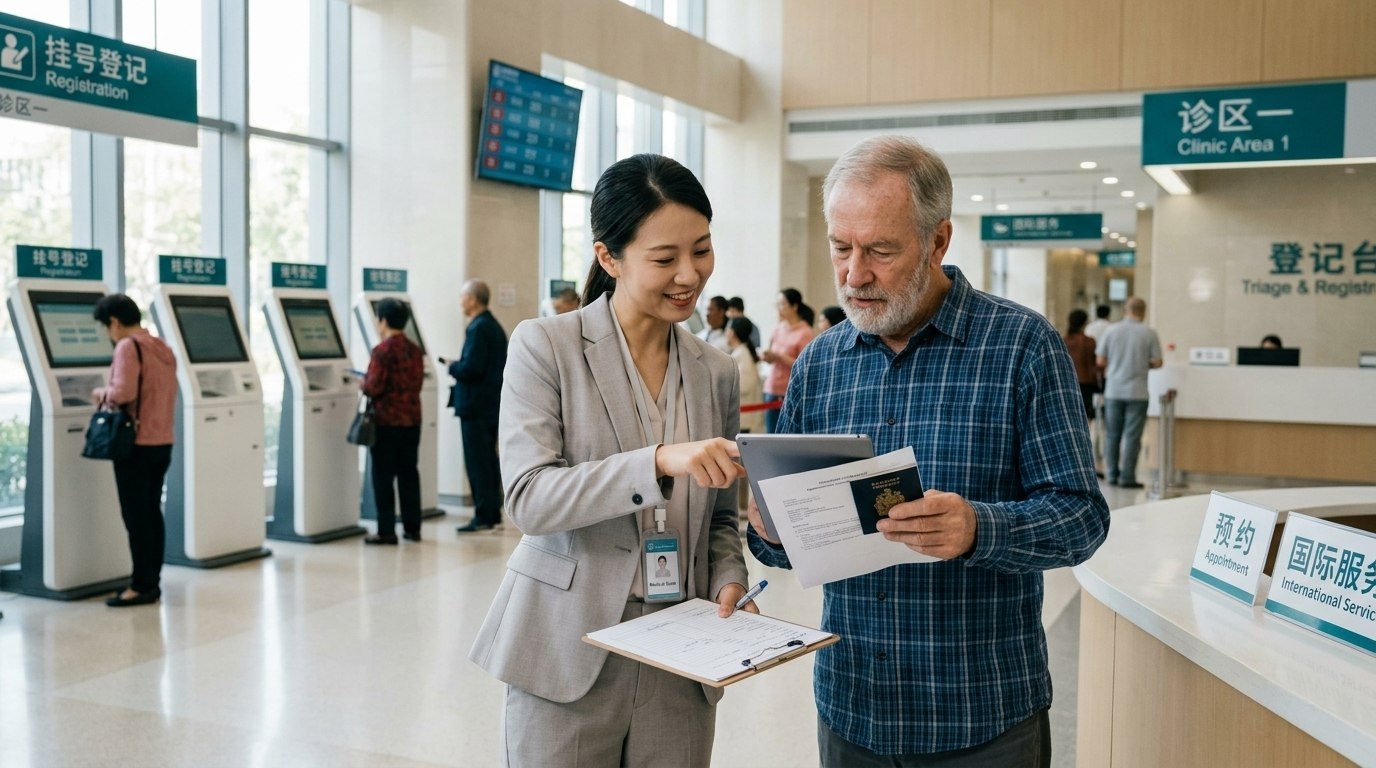
You do not need to master the whole healthcare system—only a reliable route through it.
A System That Feels Difficult—Until You Learn Its Rhythm
If a friend told me they were moving to China, I would not begin my healthcare advice with a list of famous hospitals. I would begin with one sentence: the system is often faster and more capable than it first appears, but it expects the patient to understand the route. For foreigners, the hardest part is rarely the doctor’s knowledge. It is choosing the right door, navigating registration, communicating symptoms, and knowing how payment works before anxiety takes over.
China does not offer one single “foreigner pathway.” Options vary by city and hospital, but most people choose among public hospitals, international or VIP departments inside public hospitals, private international hospitals, and neighborhood clinics. Each option solves a different problem.
Choosing the Right Door
Large public hospitals usually offer broad specialties, experienced clinicians, advanced testing, and comparatively affordable fees. They can also be crowded, digital-first, and difficult to navigate without Chinese. International or VIP departments provide a quieter process and more language support while retaining access to the resources of a major public hospital; the trade-off is a higher price. Private international hospitals are often the easiest for English-speaking patients and may coordinate insurance directly, but costs can approach those of private care in Europe or North America. Community clinics are useful for minor illnesses, routine prescriptions, vaccinations, and referrals, although their English support varies.
A practical rule is to use a convenient clinic for a straightforward problem, a major hospital for a complex or serious condition, and an international department when communication or continuity matters more than saving money. Before leaving home, confirm that the chosen department actually treats your problem and that it is open; an international department may not provide emergency care.
The Digital Front Door
In many cities, the hospital visit begins on a phone. Appointments may be booked through a hospital app, an official WeChat account, an Alipay or WeChat mini-program, a municipal platform, or a telephone line. Some hospitals still accept on-site registration, but popular specialists can fill quickly. A passport is commonly used to create the patient profile, and the spelling and document number should match exactly across the booking, hospital record, and insurance claim.
This digital layer can feel like a wall if the interface is only in Chinese. Ask a Chinese-speaking colleague, hotel concierge, relocation adviser, or trusted friend to help with the first booking—but keep control of your own identity details and payment. Screenshots of the appointment, hospital address in Chinese, department name, doctor’s name, and building or campus can prevent the classic mistake of arriving at the correct hospital but the wrong gate.
What to Carry
Bring your passport or accepted identity document, insurance card and direct-billing details, a payment method that works locally, and any referral or appointment confirmation. Add a concise medical summary: current medicines with generic names and doses, allergies, major diagnoses, previous operations, pregnancy status when relevant, and emergency contacts. Copies of recent test results or imaging reports are helpful; original images may be requested for specialist review.
Prepare a two-language symptom note. Include when the problem began, where it hurts, what makes it better or worse, fever readings, and any red-flag symptoms. Translation apps are useful, but medicine rewards precision. For a complicated consultation, a professional medical interpreter is better than relying entirely on a friend—especially when consent, surgery, psychiatric care, or a life-changing diagnosis is involved.
Inside the Hospital: Expect a Sequence
A typical outpatient visit may involve registration, payment, consultation, tests, another payment, specimen collection or imaging, a return to the doctor, and finally the pharmacy. These steps are sometimes located in different buildings or floors. Keep every printed slip and check the hospital app for queue numbers and results. Do not assume the clinician automatically sees a result immediately; ask whether you should return the same day, book a follow-up, or review it online.
Consultations in busy public hospitals can be brief. Start with your main concern, not your entire medical history. A useful opening is: “My most important symptom is ____. It started ____. I am worried because ____.” Then show your medication and allergy list. Before leaving, repeat back the plan: diagnosis or working diagnosis, tests, medicine, dosage, warning signs, and follow-up date. This small habit catches misunderstandings on both sides.
Payment and Insurance
Many facilities expect payment at several points during the visit. Common methods include RMB cash, UnionPay, and mobile payment; some international departments accept major international cards. Direct billing is not automatic: it depends on a current agreement between the hospital and the insurer, and pre-authorization may be required. Even with insurance, carry a backup way to pay and ask for the fapiao (official invoice), itemized bill, medical record, prescription, and test reports needed for reimbursement.
Foreign employees may participate in China’s social insurance system depending on their employment and applicable arrangements, while many students, visitors, and families rely on commercial coverage or self-payment. Benefits and local implementation differ, so confirm eligibility with the employer, local authority, insurer, and hospital rather than relying on another person’s experience from a different city.
Emergency Care and a Calm Plan
For a life-threatening emergency in the Chinese mainland, call 120 for an ambulance. If language is a barrier, ask a nearby Chinese speaker to give the location, landmark, phone number, and nature of the emergency. Carry your address in Chinese and save it in your phone. Not every international clinic has a full emergency department, so identify the nearest appropriate emergency hospital before you need it.
A good personal emergency plan fits on one phone screen: name, date of birth, passport number, blood type if known, allergies, key conditions, medications, insurer hotline, emergency contact, home address in Chinese, and preferred hospital. Keep the same information with a partner or colleague. In a crisis, preparation is more valuable than perfect fluency.
Traditional Chinese Medicine: Curiosity with Clear Boundaries
Foreign patients may be offered acupuncture, herbal medicine, cupping, or other traditional Chinese medicine services. These can be culturally meaningful and, for some conditions, used alongside conventional care. Approach them with the same questions you would ask about any treatment: What is the goal? What evidence supports it? What are the risks? Could it interact with my medicines? Choose licensed practitioners and disclose all herbs and supplements to every clinician. Do not let curiosity delay urgent evaluation or replace proven treatment for a serious condition.
The Human Side of Getting Well Abroad
The most unsettling part of being ill overseas is the loss of familiar cues: the signage, bedside manner, privacy expectations, and even the way bad news is discussed. China’s healthcare system can feel transactional when it is busy, yet efficiency should not be mistaken for indifference. Ask direct questions, request privacy when needed, and bring a support person for important appointments.
If you remember only three habits, make them these: learn your local options before becoming sick, keep a bilingual medical summary, and verify every plan before leaving the hospital. Foreigners do not need to master the whole system. They need a reliable route through it—and once that route is mapped, seeking treatment in China becomes less like entering a maze and more like following a well-marked path.
Practical note
This article provides general orientation, not medical advice. Hospital services, booking channels, prices and insurance arrangements change by city and institution. Verify urgent-care capability and payment rules directly with the hospital and insurer.
Official references
- Medical Guide for Foreigners in BeijingBeijing Municipal Government
- Emergency calls, appointments and payment guidanceBeijing Municipal Government

 WeChat: sj42871